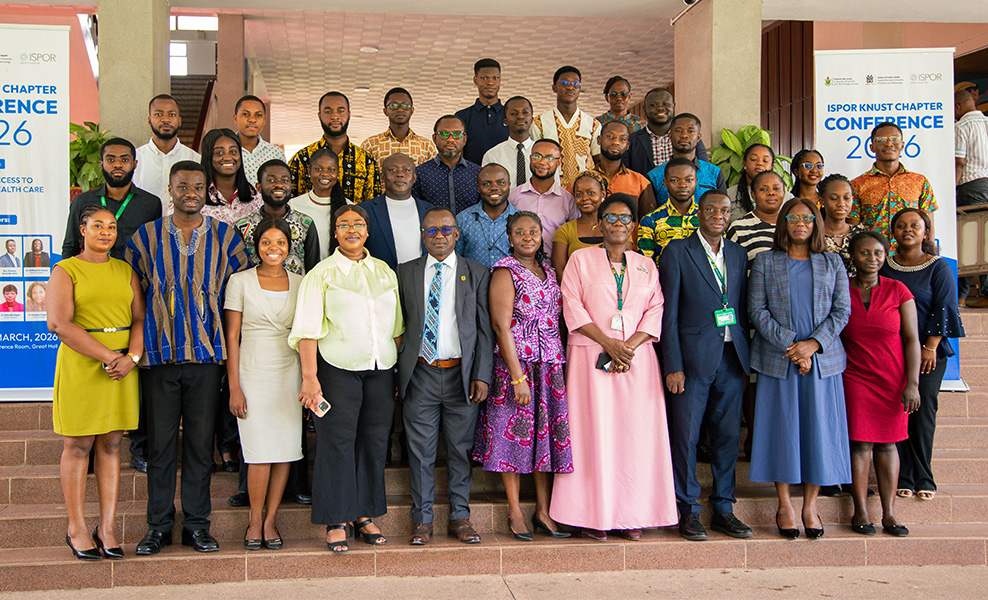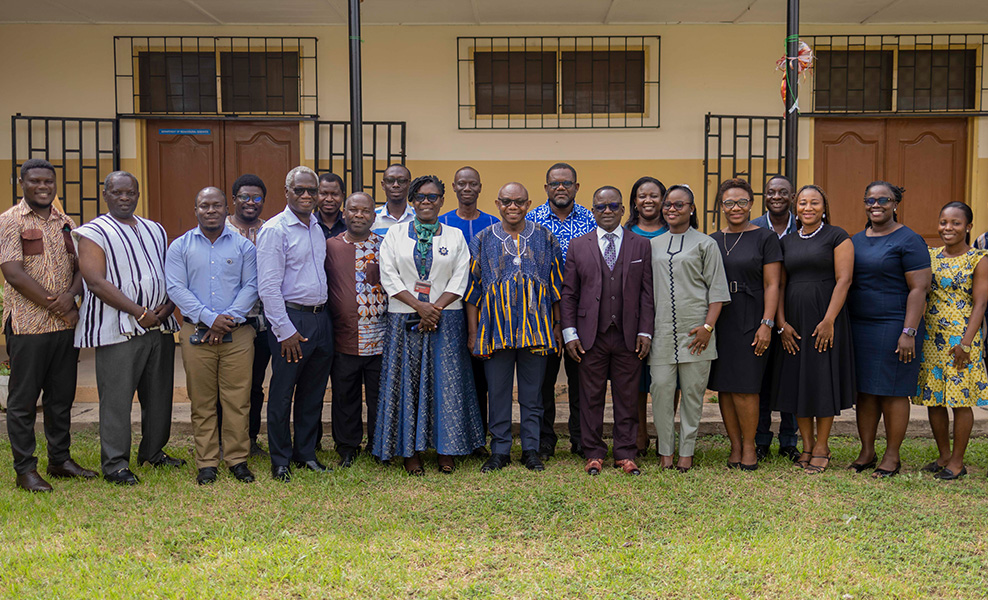
The KNUST School of Public Health has begun consultations with key stakeholders as part of a strategic review of its postgraduate training portfolio, aimed at strengthening doctoral education, boosting advanced research capacity and aligning programmes with Ghana’s development priorities and global public health needs.
At the engagement, heads of department presented proposed specialised postgraduate programmes, outlining their relevance to Ghana’s health challenges and how they could help address disease burden and system gaps while contributing to global public health solutions.
Provost of the College of Health Sciences, Professor Christian Agyare, said the proposed programmes were timely as Ghana grapples with persistent health systems challenges.
He praised the School for its sustained contribution to the College’s research output, noting that public health research accounts for a significant share of publications from the College of Health Science.

While acknowledging the pressures associated with launching new programmes, he urged staff to press on, describing the effort as an investment in both institutional growth and national impact.
From the university’s Quality Assurance and Planning Unit, Dr. Michael Opoku underscored the need for alignment with KNUST’s mission and vision, urging the School to ground the programmes in the Sustainable Development Goals and the university’s new strategic framework, PLAN2K35.
He also advised close collaboration with health institutions and regulatory bodies, strict adherence to approved course coding structures, and the pursuit of programme uniqueness through benchmarking against leading global institutions.
Industry and public sector partners welcomed the proposals while calling for stronger practical linkages.
Dr. Kofi Boateng of the Jospong Group encouraged the integration of French language training to support work across West Africa and urged that doctoral students undertake industry internships to align research with real-world problems.
Dr. Nana Akua Bafana of the Ghana Health Service highlighted gaps in disability-friendly healthcare delivery, including limited sign language support, and said the proposed disability-focused programmes could position the School as a regional leader while attracting students from neighbouring countries.
She also called for stronger follow-up mechanisms for students placed in health facilities.
Raising concerns about completion timelines, Dr. George Naah of the Environmental Protection Agency urged the School to strengthen staffing and supervision to improve graduation rates and protect the programmes’ reputation.
Msr. Isaac Bamfo, a regional coordinator at Zoomlion Ghana, said industry doors were open to students, encouraging closer collaboration to help learners connect classroom theory with field realities.
The School’s longest-serving faculty member, Professor Anthony Adusei, described the proposed programmes as highly innovative and rare in Africa, noting that some comparable offerings exist only in a few institutions globally.
He called for clear programme timelines to be shared with students from the outset to ensure timely completion and sustain the School’s standing.
The stakeholder inputs will inform the co-creation, development and implementation of the new curricula as the School moves toward formal approvals.